
COVER STORY
January 2026
OBBBA: The Deal That Will Break Your Hospital’s Safety Net
The OBBBA may have been designed to tame federal spending, but for providers it’s poised to destabilize the very hospitals caring for the nation’s most vulnerable patients. Healthcare leaders need to act now as these cuts will force painful trade-offs, including shrinking access, slowing investment, and reshaping the future of care.


COVER STORY
January 2026
OBBBA: The Deal That Will Break Your Hospital’s Safety Net
The OBBBA may have been designed to tame federal spending, but for providers it’s poised to destabilize the very hospitals caring for the nation’s most vulnerable patients. Healthcare leaders need to act now as these cuts will force painful trade-offs, including shrinking access, slowing investment, and reshaping the future of care.
TAKEAWAYS
- The OBBBA isn’t a future problem, it’s a delayed shock. While the deepest Medicaid cuts won’t hit until 2027, CFOs are already modeling workforce reductions, credit risk, and service-line contraction as if the clock is ticking.
-
Labor and capital are where the pain will surface first. With staffing costs locked in and capital markets watching closely, hospitals have fewer levers than ever to absorb reimbursement cuts without reshaping care delivery.
- Survival is becoming a strategic exercise, not a financial one. From partnerships to advocacy to targeted technology investments, CFOs are being pushed into public, political, and strategic roles they were never expected to play.
TAKEAWAYS
- The OBBBA isn’t a future problem, it’s a delayed shock. While the deepest Medicaid cuts won’t hit until 2027, CFOs are already modeling workforce reductions, credit risk, and service-line contraction as if the clock is ticking.
-
Labor and capital are where the pain will surface first. With staffing costs locked in and capital markets watching closely, hospitals have fewer levers than ever to absorb reimbursement cuts without reshaping care delivery.
-
Survival is becoming a strategic exercise, not a financial one. From partnerships to advocacy to targeted technology investments, CFOs are being pushed into public, political, and strategic roles they were never expected to play.
The political fanfare surrounding the One Big Beautiful Bill Act’s (OBBBA) passage feels jarringly out of sync with the financial reality that it’s about to unleash.
Framed in Washington as a bipartisan triumph of “fiscal restraint,” the law’s Medicaid reimbursement cuts and spending caps land at a moment when operating margins are already paper-thin, capital markets are unforgiving, and the cost of labor and supplies shows no sign of returning to pre-pandemic norms.
What federal lawmakers tout as discipline looks, from the healthcare C-suite, like a direct threat to the nation’s most fragile care infrastructure. At stake is not just next year’s budget, but the long-term solvency of hospitals that anchor America’s healthcare safety net.
Here’s how health system leaders are fighting back to protect their hospitals and patients.
On The Ground Impact
April Audain is the CFO of Denver Health, Colorado’s largest safety-net hospital. Despite operating on “razor-thin margins,” Audain says the health system is resisting the instinct to retreat as it models the combined pressures of the OBBBA.
The challenge, she emphasized, lies in the uncertainty surrounding the policy.
“It’s very hard because we don’t know exactly where all of the changes are going to be,” she said.
“This is going to be much more than just the safety-net discussion. Every hospital to some degree is impacted if there are cuts to Medicaid.”
—April Audain, CFO, Denver Health
The most immediate pressure point, she said, isn’t margin deterioration, but staffing, which represents the system’s largest and most vulnerable cost center.
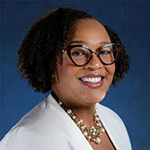
April Audain
CFO of Denver Health
While 2026 is expected to bring minimal direct impact, Audain stressed that 2027 is when “the majority of the cuts will occur,” adding that the policy environment remains fluid.
“There’s a thousand different levers that can get pulled,” she said. “Things have changed from one day to the next.”.
Still, she noted that Denver Health must prepare aggressively. As a result, the organization is gearing up for a major 2026 push on productivity and workforce allocation.
“We have to look at where we have the ability to make reductions if needed… ensuring that we have the right resources in the right places,” she said.
Audain stressed that the stakes extend far beyond safety-net hospitals.
“This is going to be much more than just the safety-net discussion,” she said. “Every hospital to some degree is impacted if there are cuts to Medicaid… How deep is the cut depends on your patient volumes and how long you can sustain it.”
At non-profit Scripps Health, the potential financial impact is also substantial.
“The impact is going to be $140 million,” said CFO Brett Tande. “That’s significant. Efficiency efforts can help, but they’re a drop in the bucket.”
Even with a relatively favorable payer mix, he said, the system may face difficult choices, including “strategic contraction decisions” affecting services across Medicaid, Medicare, and commercial lines.
The Industry POV
Mark V. Pauly is a seasoned healthcare economist, author, and Professor Emeritus of healthcare management at the Wharton School of Business at the University of Pennsylvania. Pauly frames the OBBBA’s Medicaid cuts as fundamentally different from past federal cost-containment efforts, both in scale and in their direct budget-cutting approach.
While prior reforms, such as the shift to DRGs, “slowed Medicare’s spending growth because of changes in incentives,” Pauly said they were not outright funding reductions. By contrast, the OBBBA represents “the largest [cuts] that we’ve ever seen,” especially for Medicaid, a program that has essentially been on an expansion path since 1965.

Mark V. Pauly
Professor Emeritus, Wharton School
2027 is the inflection point: CFOs expect the majority of OBBBA-related Medicaid cuts to take effect starting in 2027, not immediately, creating a dangerous false sense of calm.
For CFOs, Pauly says the financial shock may feel like a forced return to pre-expansion operating levels. Medicaid spending surged during the Biden administration, and the legislation appears “motivated by the observation that Medicaid spending had expanded substantially.”
The Workforce
The workforce implications of the OBBBA are where policy abstraction collides with operational reality.
Pauly advises CFOs to treat the coming reimbursement environment not as a temporary disruption, but as a return to a pre-expansion baseline—forcing uncomfortable reassessments of staffing growth that followed pandemic-era funding.
“Look at all the people you have hired since that date and decide whether you really need them or not,” he said.
While Pauly does not expect mass layoffs, he is blunt about the math of healthcare cost containment.
“Especially for a labor-intensive product like healthcare, the synonym for cost containment is firing people,” he said. “That’s the egg you have to crack in order to make this omelet.”
In practice, that pressure is more likely to show up through slowed hiring, unfilled vacancies, and role consolidation. But the outcome is the same: fewer people delivering care in a system already stretched thin.
Pauly also warns that hospitals operating under mandated staffing rules may face even fewer levers to pull.
“In places like California,” he noted, “the hospital’s ability to cut back staffing is constrained by rules for minimum staffing requirements.”
The deeper issue, he said, is one few leaders are willing to say publicly.
“It’s never going to be politically correct to say we’re going to cut back on our access to lower-income people,” Pauly said. “But that is kind of what the signals for lower Medicaid spending are telling hospitals they’re supposed to do.”
“Especially for a labor-intensive product like healthcare, the synonym for cost containment is firing people.”
—Mark V. Pauly, Professor Emeritus, Wharton School
Capital Markets
While the immediate impact of the OBBBA has not yet surfaced in credit ratings, lenders and rating agencies are watching closely.
“We just went through our rating agency updates,” said Tande. “Fitch affirmed our AA flat rating with a stable outlook.”
That stability, however, comes with heightened scrutiny. Agencies are asking pointed questions about Medicaid exposure, timing of cuts, and management response.
“I've heard numbers…approaching $500 million or more,” Tande said. “If health systems don't respond fast enough, this most definitely will have an impact on credit ratings.”
For now, the financial damage remains prospective—but Tande sees that as temporary.
“100% of those impacts are in the future,” he said. “No one yet has had a rating impact, but I bet if we have this discussion three years from now, we’ll be able to point to a bunch of health systems where downgrades were OBBBA-related.”
For CFOs, the implication is clear: the window to act is now, not when ratings begin to fall.
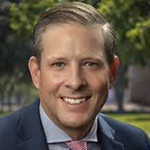
Brett Tande
CFO, Scripps Health
The Strategies
Moving Forward While We Can
Some safety-net systems are already deciding whether to pause or proceed with capital investments. At Denver Health, Audain says delay often creates more risk than relief. “We’re moving forward with some of our larger capital projects,” she said, noting Denver Health has just broken ground on a clinic replacement slated to open in summer 2027.
Delaying projects, she said, could prove costly.
“It literally could cost us more money by delaying some of these,” Audain said.
Rather than waiting for policy clarity, Denver Health is shifting toward long-range planning.
“We need a plan for the future,” she said. “We’re not just holding our breaths to figure out what’s going to happen next.”
“Efficiency efforts can help, but they’re a drop in the bucket.”
—Brett Tande, CFO, Scripps Health
That planning includes aligning capital with service-line growth and essential community needs—despite fiscal uncertainty.
Fighting Back on the State Level
Tande stressed the importance of pivoting from federal advocacy to state-level strategy.
“OBBBA is going to hit… particularly significant here in California,” he said. “The question is, at the state level, do we want to rethink what’s been occurring to make sure we don’t artificially manufacture a public health crisis?”
$140 million in uncompensated care: Denver Health alone provided more than $140 million in uncompensated care in a single year, underscoring how little cushion safety-net hospitals have.
With upcoming state mandates, like seismic safety compliance and revenue-limiting health affordability laws, health systems face overlapping financial pressures.
Pauly noted that state intervention may be the most practical solution.
“Probably the best one is the most obvious one,” he said. “Lobby state governments to help out … whether it’s a new payment model for Medicaid managed care plans, or whether it’s some kind of direct subsidy to hospitals that have high Medicaid shares.”
With the federal government “more than broke,” he argues that states are now the only realistic source of new support.
Pauly emphasized that the mechanism for change matters less than the outcome.
Tande ultimately frames state engagement not as a political exercise but as a survival imperative.
“The states are the obvious place to go to for reconsideration of regulatory requirements that will exacerbate the cuts from OBBBA.” he said.
For CFOs, the focus must not just be on federal policy outcomes, but on how state-level regulations and existing obligations will intersect with Medicaid reductions.
Opportunities for Growth and Transformation
Instead of building contraction-only scenarios, Denver Health is running models that identify both vulnerabilities and openings.
“Right now, our focus is really looking at where we have opportunities—where do we have the ability to gain market share?” Audain said. That includes evaluating which service lines are firmly essential.
Crucially, Audain frames this moment not as a survival drill but as a strategic reset.
“We’re not looking at things from the perspective of how we retract,” she said. “We’re looking at this as an opportunity to figure out where the best areas for growth are for us.”
“If health systems don't respond fast enough, this most definitely will have an impact on credit ratings.”
—Brett Tande on capital risk
Partnerships
Audain believes the OBBBA will accelerate partnerships out of necessity, not strategy.
“I think we’re at the precipice of where we’ve got to all play together in the sandbox really well,” she said.
When hospitals or clinics close, patients don’t disappear.
“Patients have to go somewhere,” Audain said. “It becomes a question of how we absorb this.”
Tande agrees that financial pressure will force consolidation, particularly in service lines with chronically low reimbursement.
“You’re trying to offload losses and give the keys to someone who has figured out how to make those things run better operationally,” he said.
But Pauly is skeptical that true collaboration will emerge.
“I wish I could say yes, but I don’t think so,” he said. “Self-interest is hard to override.” Instead, he anticipates distressed-asset deals—often driven by private equity.
“Usually, the private equity calculus is… if we can’t turn it around… at least the liquidation value will compensate us for our investment,” Pauly said.
The result may be temporary stabilization—or an orderly path to closure.
Credit risk is coming: Rating agencies have not yet downgraded hospitals over OBBBA, but CFOs expect future downgrades to be directly tied to Medicaid cuts.pitals have.
What Washington Needs to Understand
Audain wants policymakers to deeply understand how austerity-driven Medicaid cuts threaten the long-term stability of America’s hospital infrastructure, particularly for communities with the fewest resources.
She stressed that funding cuts do not reduce patient need—only the system’s capacity to respond.
“They’re going to come regardless of if they have the ability to pay,” she said.
In 2023 alone, Denver Health provided more than $140 million in uncompensated care, and the health system cares for nearly 25% of Denver's population annually.

Garrick Stoldt
CFO, Saint Peter’s University Hospital
When patients lose access to preventive and primary care, “they come in sicker,” Audain said. “They come in through the ED, and we know that’s not the portal we want them to come into.”
The result, she cautioned, would be “absolute devastation” if the cuts proceed as currently structured.
Audain appealed for empathy and equity in federal decision-making. She also noted growing public awareness.
“We’re starting to see that people are truly understanding what’s happening,” she said, but argues that policymakers still haven’t fully absorbed what’s at stake.
Tande underscored that the core challenge of Medicaid and Medicare cuts lies in the longstanding cost shift: government programs often fail to cover the true cost of care, forcing commercial payers and patients to subsidize the gap.
“As long as we don’t fix this cost-shift which is the primary systemic issue in this country’s health system, all of today’s legislative action, whether it be OBBBA, 340B, or state actions such as OHCA here in California, are temporary remedies on the margin that won’t solve this fundamental systemic issue,” he said.
A sustainable reimbursement framework, he suggested, would require raising Medicare and Medicaid rates while recalibrating commercial payments to level the playing field.
“Medicare and Medicaid have to come up, [and] commercials have to come down,” he noted, acknowledging the political difficulty of funding such changes through taxes.
Crucial CFO Advocacy
As Medicaid cuts loom, CFOs are being pushed into far more public roles.
“We absolutely have to be at the forefront to say, ‘If you do this, we need you to understand what it’s going to mean for hospitals as a whole,’” Audain said.
That shift is already happening.
“We’ve been way more vocal,” she said. “We’re sounding the cry to say this could be absolutely devastating.”
Tande argues nonprofit health systems are structurally disadvantaged in advocacy.
“We don’t do that advocacy work at the same level as other elements in healthcare,” he said. “Money buys access, and everyone but not-for-profit health care uses money to buy access.”
Still, collaboration among CFOs is increasing, and silence is no longer an option.
“It’s important for us to speak up,” Audain said. “And if you don’t do this, this is what it’s going to mean.”
Marie DeFreitas, CFO Editor, HealthLeaders
Subscribe to HealthLeaders CFO Newsletter + Daily Briefing
By subscribing to HealthLeaders I agree to sign up to receive newsletters and special offers. I understand that I can opt out at any time. Privacy policy.